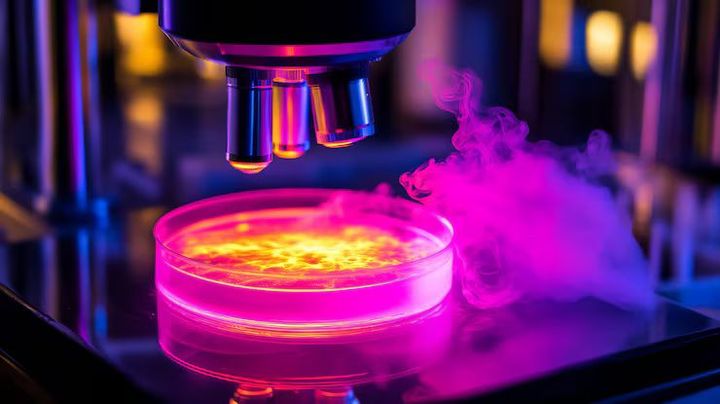
Ultraviolet light based polymerization exists to provide faster and more energy-efficient curing compared to traditional thermal drying methods. Instead of relying on heat and long drying times, UV curing equipment uses high-intensity UV light to activate photoinitiators within the material. These photoinitiators trigger polymer chain formation, causing the material to harden almost instantly.
UV curing systems are widely used in manufacturing technology sectors such as printing, electronics, automotive coatings, medical device assembly, packaging, and woodworking. Over time, these systems have evolved from mercury vapor lamps to LED UV curing technologies, improving energy efficiency and process control.
As industries increasingly focus on speed, precision, and environmental considerations, ultraviolet light polymerization has become an essential part of modern production lines.
Importance
UV curing systems are important because they enhance productivity, reduce processing time, and improve material performance. In manufacturing environments where turnaround speed is critical, rapid curing allows continuous production without long drying stages.
Industries that commonly use UV curing equipment include:
Key advantages of ultraviolet light polymerization:
-
Instant curing under UV exposure
-
Reduced energy usage compared to heat-based curing
-
Improved surface durability and chemical resistance
-
Lower emissions compared to some solvent-based systems
Traditional thermal curing may require high temperatures and extended drying periods. In contrast, UV curing systems can complete polymerization within seconds. This improves workflow efficiency and minimizes space needed for drying equipment.
The following table compares UV curing with conventional thermal curing:
| Feature | UV Curing Systems | Thermal Curing Methods |
|---|
| Curing Speed | Very Fast (seconds) | Slower (minutes to hours) |
| Energy Source | Ultraviolet Light | Heat |
| Temperature Requirement | Low to Moderate | High |
| Emission Profile | Generally Lower | May involve solvent release |
| Production Efficiency | High | Moderate |
This comparison highlights why ultraviolet light based polymerization is increasingly integrated into industrial automation systems.
Recent Updates
During 2025 and early 2026, technological developments have further improved UV curing systems.
One major advancement is the broader adoption of LED UV curing technology. Unlike traditional mercury lamps, LED systems provide:
-
Longer operational lifespan
-
Lower heat output
-
Improved energy efficiency
-
Instant on/off capability
Manufacturers are also enhancing wavelength customization. Different photopolymerization processes require specific UV wavelengths to activate photoinitiators effectively. Adjustable wavelength systems allow better compatibility with advanced materials.
Another recent trend involves integration with smart manufacturing platforms. UV curing equipment is increasingly connected to digital monitoring systems that track:
-
Lamp intensity
-
Exposure time
-
Temperature stability
-
System performance data
These monitoring systems support predictive maintenance and quality assurance in industrial curing technology.
Sustainability has also become a focus. Many industries are transitioning to formulations with lower volatile organic compound (VOC) content. UV curing systems align with this shift by reducing reliance on solvent evaporation processes.
The table below summarizes key recent developments:
| Innovation Area | Description | Operational Benefit |
|---|
| LED UV Technology | Replaces mercury lamps | Improved energy efficiency |
| Smart Monitoring | Real-time intensity tracking | Consistent curing quality |
| Wavelength Optimization | Adjustable UV output | Better material compatibility |
| Sustainable Formulations | Lower VOC photopolymer materials | Reduced environmental impact |
These trends reflect ongoing modernization within manufacturing technology and industrial curing systems.
Laws or Policies
UV curing systems in India are influenced by industrial safety, environmental, and equipment standards.
The Factories Act, 1948 outlines safety obligations for machinery operation, including protection against radiation exposure and electrical hazards. UV radiation can pose risks to skin and eyes, so proper shielding and protective equipment are necessary.
Guidelines from the Directorate General Factory Advice Service and Labour Institutes (DGFASLI) emphasize:
-
Protective enclosures for UV lamps
-
Use of UV-blocking safety glasses and gloves
-
Adequate ventilation
-
Electrical safety compliance
Environmental standards under the Air (Prevention and Control of Pollution) Act, 1981 may apply to manufacturing units using coatings or inks. While UV curing often reduces solvent emissions, facilities must still ensure regulatory compliance.
The Bureau of Indian Standards (BIS) provides standards for electrical equipment and industrial systems. UV curing equipment must meet applicable safety and performance specifications.
Companies implementing ultraviolet light polymerization in regulated sectors such as medical devices or food packaging must also comply with industry-specific quality standards to ensure material safety and reliability.
Adherence to these regulations ensures safe operation and responsible industrial practices.
Tools and Resources
Successful implementation of UV curing systems requires supporting tools and technical resources.
Common system components include:
-
UV lamps or LED UV modules
-
Reflectors and optical systems
-
Conveyor-based curing chambers
-
Control panels and intensity regulators
Design and process management tools:
-
Material data sheets for photopolymer formulations
-
Exposure time calculators
-
Quality inspection checklists
-
Digital monitoring dashboards
Protective and safety equipment:
-
UV-blocking face shields
-
Protective gloves
-
Shielded enclosures
-
Ventilation systems
The table below outlines essential resources in a UV curing setup:
| Resource Category | Purpose |
|---|
| LED UV Modules | Provide controlled UV radiation |
| Intensity Measurement Tool | Monitor curing consistency |
| Protective Shielding | Reduce operator exposure |
| Process Log Sheets | Document exposure parameters |
| Ventilation Systems | Maintain safe air quality |
Routine calibration and monitoring of UV intensity are important to maintain consistent polymerization quality. Operators should follow manufacturer guidelines and maintain documentation for quality assurance.
FAQs
What is ultraviolet light based polymerization?
It is a chemical process where UV light activates photoinitiators in a liquid formulation, causing rapid polymer formation and hardening.
How is LED UV curing different from traditional UV curing?
LED UV curing uses light-emitting diodes instead of mercury lamps. It generally produces less heat, consumes less energy, and allows instant on/off operation.
Is UV curing suitable for all materials?
UV curing works best with specially formulated photopolymer materials. Not all coatings or adhesives are compatible with ultraviolet light polymerization.
What safety precautions are required?
Operators should use UV-protective eyewear, protective clothing, proper shielding, and ensure adequate ventilation to minimize exposure risks.
Can UV curing systems be integrated into automated production lines?
Yes. Many modern UV curing systems are designed for integration with industrial automation systems, allowing synchronized operation with conveyors and robotic assemblies.
Conclusion
UV curing systems play a significant role in modern manufacturing technology by enabling rapid and controlled ultraviolet light based polymerization. Their ability to cure materials within seconds improves productivity and reduces energy consumption compared to conventional thermal processes.
Recent advancements in LED UV curing, smart monitoring systems, and sustainable material formulations demonstrate the continued evolution of industrial curing technology. At the same time, compliance with Indian safety and environmental regulations remains essential for responsible implementation.
With appropriate equipment, monitoring tools, and safety measures, UV curing systems provide an efficient and reliable solution for industries that require fast, durable, and consistent material curing processes.