Ice Cream Making Machines Overview for Frozen Dessert Production
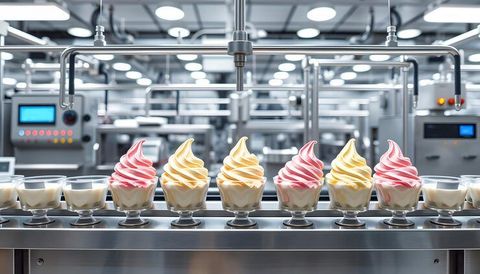
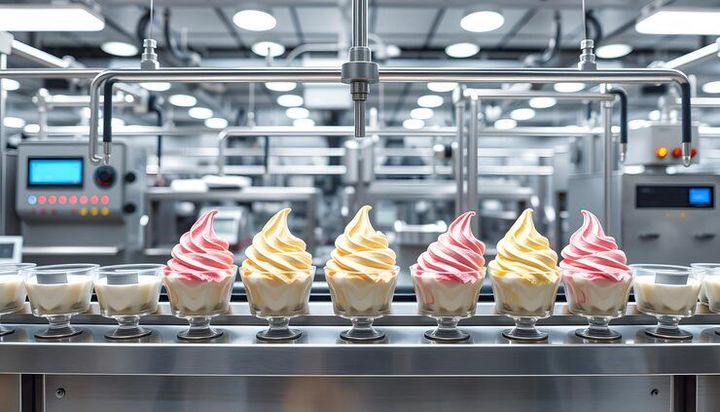
Ice cream making machines are industrial and commercial systems designed to mix, freeze, and aerate ice cream and related frozen desserts in a controlled manner. These machines transform liquid mixes containing milk, fats, sugars, and stabilizers into smooth, semi-solid frozen products with consistent texture and structure.
Ice cream making machines exist because frozen desserts require precise control over temperature, mixing speed, and air incorporation. Manual or uncontrolled freezing leads to uneven texture, large ice crystals, and inconsistent quality. As demand for frozen desserts increased, especially in commercial and industrial settings, specialized machines were developed to standardize production and maintain product consistency.
In modern food processing environments, ice cream making machines are part of integrated production systems that support hygiene, repeatability, and scalability. They enable manufacturers to produce uniform frozen desserts while meeting food safety and quality expectations.
Importance: Why Ice Cream Making Machines Matter in Frozen Dessert Production
Ice cream making machines are important because texture, smoothness, and stability define the quality of frozen desserts. Small variations in freezing or mixing can significantly affect mouthfeel and appearance.
This topic is relevant to:
-
Frozen dessert manufacturing facilities
-
Dairy and food processing plants
-
Quality and production management teams
-
Food technology and process engineering professionals
These machines help solve challenges such as inconsistent freezing, uneven air distribution, and variable product density. By controlling processing parameters, ice cream making machines support predictable output and efficient production flow.
In today’s context, frozen dessert production often involves multiple product varieties, formulations, and formats. Ice cream making machines provide the flexibility needed to manage these variations while maintaining consistent quality standards.
Main Types of Ice Cream Making Machines
Ice cream making machines are classified based on production scale and processing method.
Batch ice cream freezers
Batch freezers process a fixed quantity of ice cream mix at a time. They are commonly used in small-scale or specialty production.
Key characteristics include:
-
Controlled batch size
-
Flexibility for different recipes
-
Suitable for limited production volumes
Continuous ice cream freezers
Continuous freezers operate without interruption, processing ice cream mix continuously.
Typical features include:
-
High production capacity
-
Consistent product quality
-
Integration into large production lines
Soft ice cream machines
These machines produce soft-serve ice cream with higher air content and immediate dispensing.
Combined mixing and freezing systems
Some systems integrate mixing, freezing, and aeration into a single unit for streamlined processing.
The table below summarizes machine types:
| Machine Type | Typical Application |
|---|---|
| Batch freezer | Small-scale production |
| Continuous freezer | Industrial production |
| Soft ice cream machine | Immediate serving formats |
| Integrated systems | Streamlined processing |
How Ice Cream Making Machines Work
Ice cream making machines operate through controlled mixing, freezing, and air incorporation.
Mix feeding
Prepared ice cream mix is fed into the machine at a controlled rate.
Freezing process
The mix is cooled rapidly using refrigeration systems to form fine ice crystals.
Agitation and scraping
Internal blades or beaters continuously scrape frozen layers from the cooling surface, preventing large crystal formation.
Air incorporation
Air is introduced into the mix to achieve the desired texture and density.
Discharge
The finished ice cream exits the machine and moves to packaging or further processing.
This process ensures smooth texture and uniform structure.
Material Flow in Frozen Dessert Production
Ice cream production follows a defined material flow supported by multiple machines.
Mix preparation
Ingredients are blended and pasteurized before freezing.
Cooling and aging
The mix is cooled and rested to improve texture and stability.
Freezing and aeration
Ice cream making machines freeze and aerate the mix.
Forming and packaging
Frozen dessert is shaped, filled, or packed into containers.
Hardening and storage
Products are further frozen to stabilize structure before distribution.
The table below outlines the flow:
| Production Stage | Key Function |
|---|---|
| Mix preparation | Ingredient blending |
| Aging | Texture development |
| Freezing | Ice crystal formation |
| Packaging | Product shaping |
| Hardening | Structural stabilization |
Role of Ice Cream Machines in Production Workflows
Ice cream making machines act as the core processing stage in frozen dessert production.
Consistency control
Machines regulate overrun, temperature, and mixing speed.
Scalability
They support both small-batch and large-volume production.
Integration with hygiene systems
Machines are designed for cleaning and sanitation compatibility.
Process coordination
They synchronize with upstream and downstream equipment.
Their position in the workflow directly influences product quality.
Recent Updates and Industry Trends (2025–2026)
Over the past year, ice cream making machine technology has continued to evolve.
Improved temperature control (2025)
New systems provide finer control over freezing rates to improve texture consistency.
Energy-efficient refrigeration systems
Manufacturers emphasized reducing energy usage during continuous operation.
Automation and digital monitoring
By late 2025, more machines included digital interfaces for monitoring temperature, overrun, and throughput.
Adaptation to varied formulations
Machines increasingly support dairy-free and alternative ingredient mixes.
The table below highlights recent trends:
| Trend Area | Observed Direction |
|---|---|
| Freezing precision | Higher control |
| Energy use | Improved efficiency |
| Monitoring | Digital integration |
| Product variety | Greater adaptability |
Laws, Regulations, and Food Safety Considerations
Ice cream making machines are governed by food safety and processing regulations.
Food hygiene standards
Machines must support cleanable surfaces and contamination prevention.
Temperature control regulations
Freezing and storage temperatures are regulated to ensure food safety.
Material compliance
Food-contact components must meet approved material standards.
Operational safety rules
Machinery must comply with electrical and mechanical safety guidelines.
These regulations shape machine design and operation practices.
Tools and Resources Supporting Ice Cream Production
Several tools and resources support effective use of ice cream making machines.
Process flow diagrams
Visual guides show how machines integrate into production lines.
Machine specification sheets
Datasheets outline capacity, freezing rate, and power requirements.
Quality testing tools
Tools measure texture, overrun, and temperature.
Cleaning and sanitation protocols
Structured guides support hygiene compliance.
Production planning templates
Templates help manage batch sizes and schedules.
These resources support consistent frozen dessert production.
Operational Considerations in Frozen Dessert Facilities
Effective operation depends on several factors.
Ingredient consistency
Variations affect freezing behavior and texture.
Temperature stability
Stable refrigeration supports uniform ice crystal formation.
Cleaning routines
Regular cleaning maintains hygiene and machine performance.
Process timing
Coordination between stages prevents texture degradation.
These considerations highlight the importance of process control.
FAQs About Ice Cream Making Machines
What is the main function of ice cream making machines?
They freeze and aerate ice cream mix to create smooth frozen desserts.
Are batch and continuous machines used together?
They are usually used separately, depending on production scale.
Why is air incorporation important?
Air affects texture, density, and mouthfeel.
Can machines handle different ice cream recipes?
Many machines can be adjusted for different formulations.
How is texture consistency maintained?
Through controlled freezing, mixing, and temperature regulation.
Conclusion
Ice cream making machines are essential for producing consistent, high-quality frozen desserts. By controlling freezing, mixing, and air incorporation, these machines transform liquid mixes into stable and smooth products suitable for commercial distribution.
Understanding the types of ice cream making machines, their operation, material flow, recent technological developments, and regulatory considerations provides clarity on their role in frozen dessert production. Supporting tools, monitoring systems, and hygiene practices further enhance reliability.
As frozen dessert markets continue to diversify in flavors and formats, ice cream making machines remain central to achieving predictable quality, efficiency, and food safety in modern production environments